THE DOSE
Loud and long add up
HSE says 105 dB for 5 minutes gives the same noise dose as 94 dB for an hour or 88 dB for 4 hours.
Check a levelWHAT THE GUIDANCE SAYS
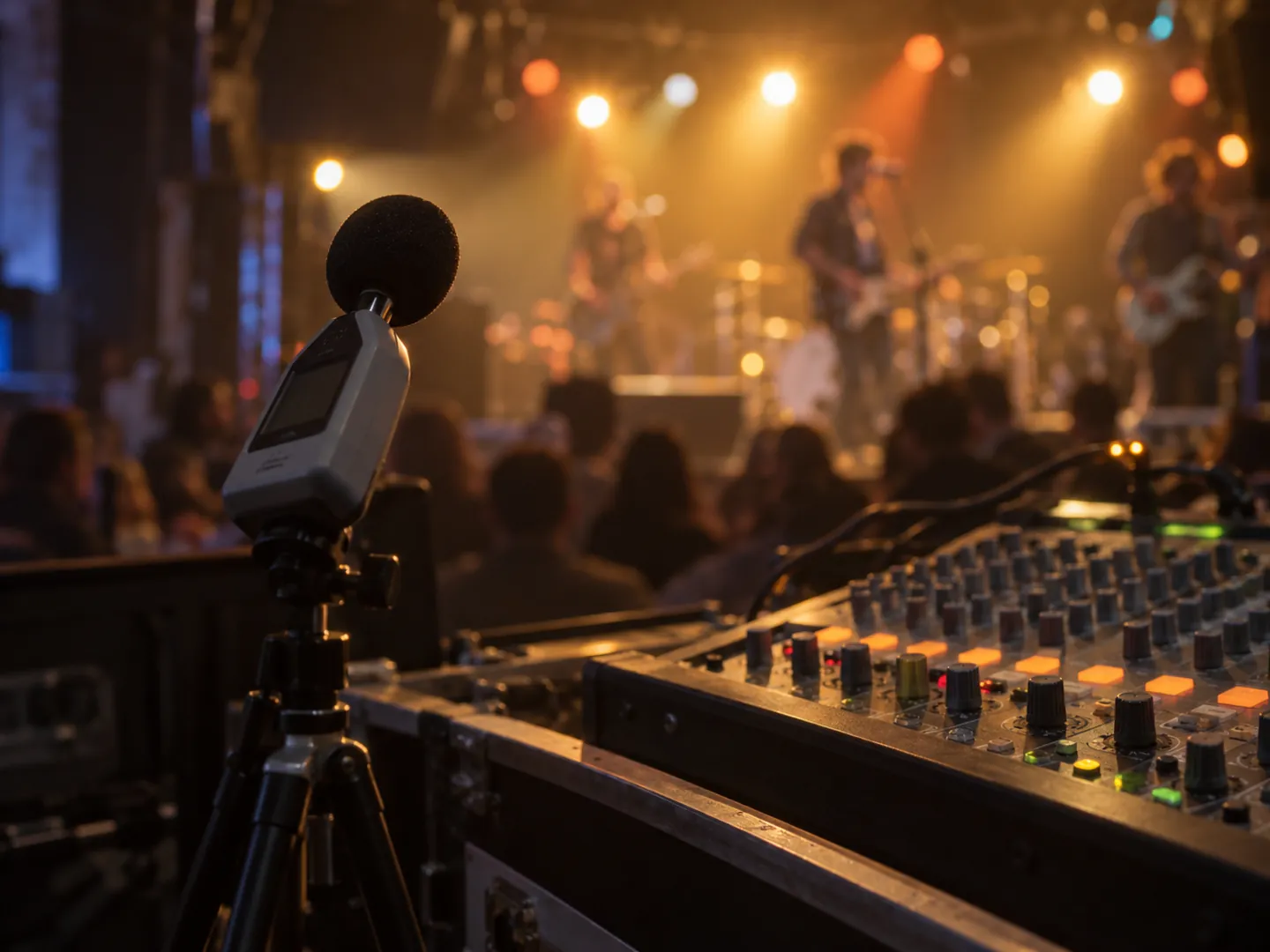
The person at the mixer sets the dose for the room.
Hearing damage depends on how loud and for how long. UK guidance for music and entertainment turns that into a simple rule of thumb: add 3 dB and the safe listening time halves.
3 dB doubles the energy
THE SHORT ANSWER
A decibel number alone does not tell you the risk.
How long people hear it matters just as much.
THE DOSE
HSE says 105 dB for 5 minutes gives the same noise dose as 94 dB for an hour or 88 dB for 4 hours.
Check a levelMEASURE
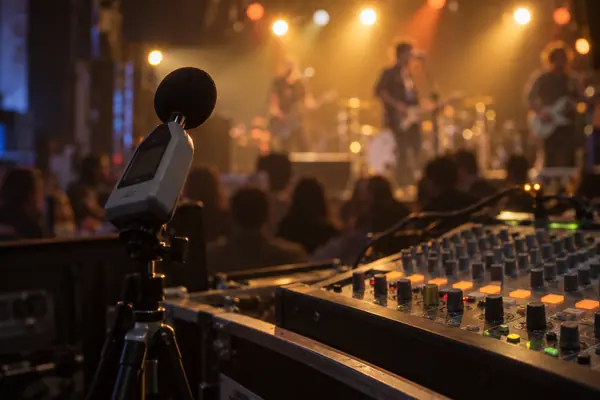
The WHO venue standard asks events to monitor sound levels and keep the average to 100 dB over 15 minutes.
See the numbersPROTECT
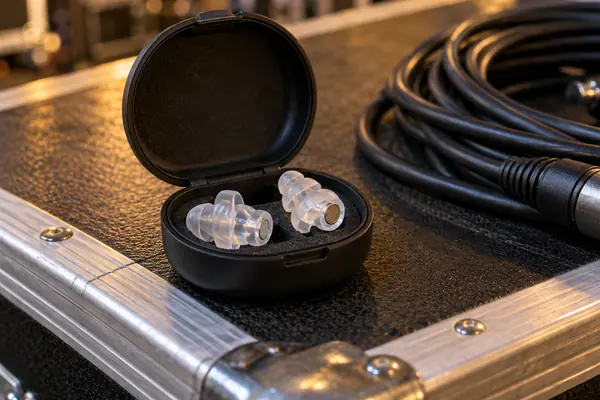
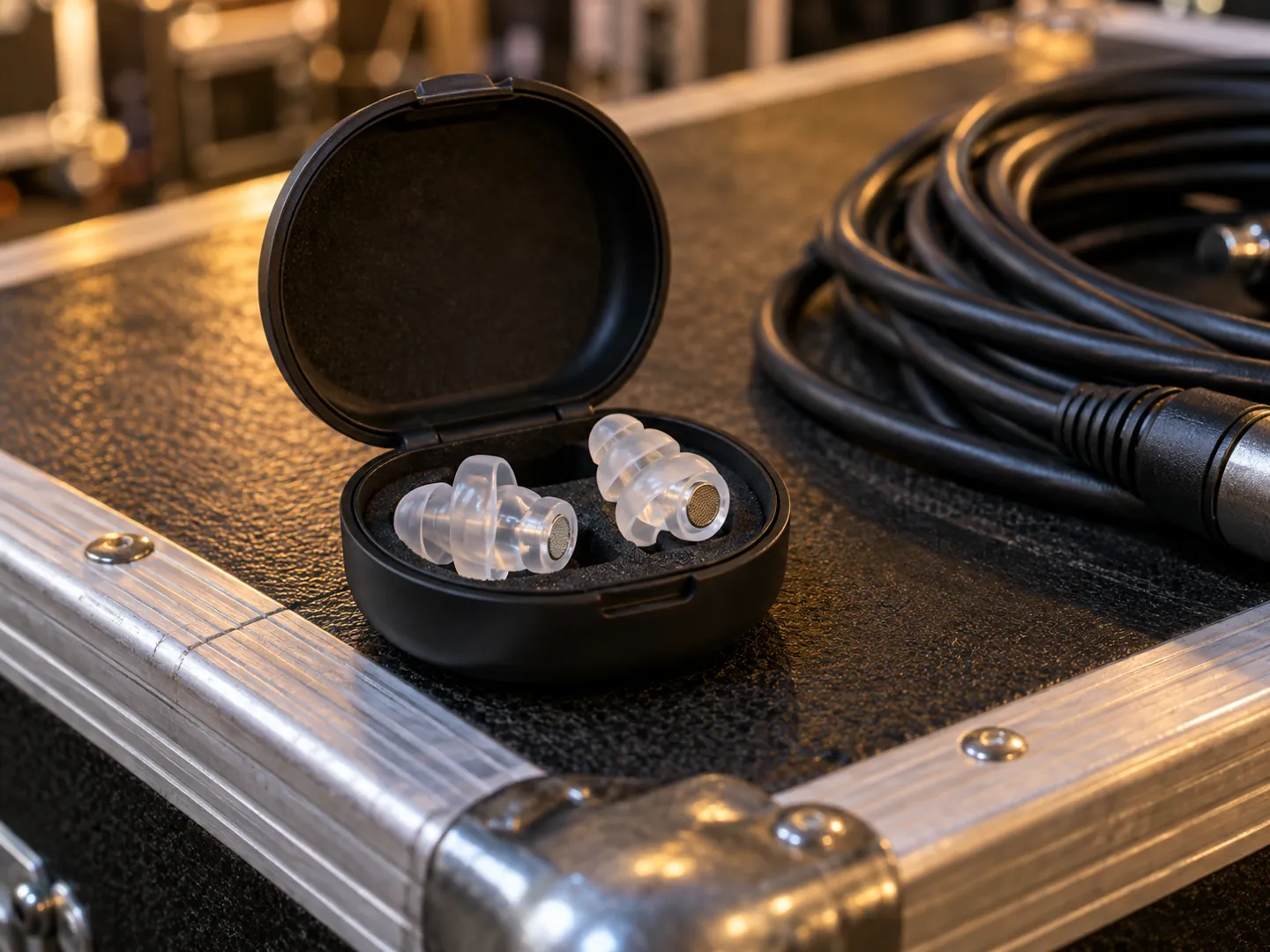
Foam plugs cut high notes far more than low ones. HSE notes specialised plugs can reduce sound almost equally across frequencies.
What crews doA QUICK LEVEL CHECK
Pick an average sound level to see how long it takes to reach the same noise dose as 85 dB for a full 8-hour day. The bar shows how quickly that happens.
Figures from HSE's Sound Advice (HSG260), Table 1. General information about workplace noise guidance, not medical or legal advice.
TWO NUMBERS WORTH KNOWING
One figure on how decibels add up,
one on how loud the job at the desk can be.
+3 dB
Added level that doubles sound energy
HSE says each 3 dB added doubles the sound energy, though it is only just noticeable to a listener. Two instruments at 85 dB together make 88 dB.
THE 3 dB RULE · HSE
99–100 dB
Representative exposure, festival FOH engineer
HSE's table of representative exposures at indoor and stadium music festivals lists the front-of-house sound engineer at 99 to 100 dB, and the monitor engineer at 96 to 104 dB.
AT THE DESK · HSE
In Great Britain the Control of Noise at Work Regulations 2005 apply to the music and entertainment sectors from 6 April 2008. They protect workers; HSE says they do not apply to members of the public who choose to go to noisy places.
FOUR HABITS FROM THE GUIDANCE
These come from HSE's Sound Advice and the WHO venue standard. Most are about planning and communication rather than turning everything down.
The WHO standard asks venues to monitor sound levels and limit the average to 100 dB over 15 minutes.
HSE notes that musicians asking for ever higher monitor levels can push the whole room up. Plan levels before the show.
Some venues fit noise limiters that cut power when a set level is reached. HSE advises asking how it works before the gig.
HSE advises allowing recovery time after loud shows, and the WHO standard asks events to offer quiet zones.
THE THREE UK NUMBERS
Under the Control of Noise at Work Regulations 2005, employers must assess the risk and give information and training at a daily or weekly average of 80 dB(A). At 85 dB(A) they must provide hearing protection and hearing protection zones.
The exposure limit value is 87 dB(A), which takes account of hearing protection and must not be exceeded. There are matching peak values of 135, 137 and 140 dB for sudden sounds such as a cymbal strike.
Questions
HSE explains that adding 3 dB doubles the sound energy, even though most listeners barely notice the change. So 83 dB for 4 hours gives the same dose as 80 dB for 8 hours.
No. HSE says the Noise Regulations protect people at work and do not apply to members of the public who make an informed choice to go to noisy places. The WHO venue standard is aimed at audiences.
WHO's Global standard for safe listening venues and events has six features, starting with limiting average levels to 100 dB over 15 minutes and monitoring sound levels. It also covers acoustics, hearing protection, quiet zones and staff training.
Conventional plugs cut high frequencies more than low ones: HSE gives the example of a foam plug reducing 125 Hz by 25 dB but 4000 Hz by almost 40 dB. Specialised plugs reduce sound more evenly.
HSE suggests you probably need to act if people have to raise their voices to hold a normal conversation about 2 metres apart for at least part of the day.
Sources
ABOUT THIS NAME
airtouchmixers.com is part of the DoodleSale portfolio. It isn't in an auction right now, but you can ask about leasing it.